
Language
Views: 0 Author: HUIPU Technical Team Publish Time: 2026-10-07 Origin: Site


A new wall-mounted hair dryer is not a direct replacement just because it looks similar to the old one. In an existing hotel, the wall position, fixing points, cable route, power connection, mirror, and vanity may already be fixed.
Before replacing dozens or hundreds of units, check whether the new dryer can work with the existing installation.
Most projects fall into four groups: direct replacement, minor adaptation, custom compatibility solution, or retrofit required.
Sometimes yes, but compatibility should be confirmed first.
A direct replacement is most realistic when four conditions match:
available wall space
mounting and fixing conditions
electrical connection
normal guest-use position
A new dryer may have a similar shape but a different wall base. The holes may not line up. The cable may enter from a different position. The cord may not reach the mirror area in the same way.
Replacement compatibility should therefore be checked against the real room, not only against a product photo.
For renovation work, the existing room should define the replacement requirements.
Before HUIPU recommends a model, we normally ask for:
photos of the existing dryer and wall base
product dimensions, if available
rated power and voltage
plug-in or hardwired installation
installation position and fixing method
location of the outlet or building-side cable
limits around the mirror, vanity, or other fixtures
This information helps rule out unsuitable options before samples or bulk production. It also avoids choosing a replacement model first and discovering the installation conflict later.
Physical compatibility starts with the wall base, not the dryer body.
Measure the area occupied by the existing wall base.
The new base should fit without interfering with the mirror, vanity, switches, sockets, shelves, or other bathroom fixtures.
Also check what will be exposed after the old unit is removed. A smaller base may reveal old holes, marks, unfinished surfaces, or color differences. That can create extra repair work even if the new dryer fits.
Do not assume the original holes can be reused.
Different bases use different fixing points. If the new model does not match the old pattern, the hotel may need new holes or local wall repair.
For suitable projects, HUIPU can evaluate changes to the mounting holes or wall-base structure. This depends on technical feasibility and project quantity. A project-specific MOQ may apply.
Check that the new unit does not conflict with the mirror, vanity, shelf, towel area, switches, or nearby fittings.
The goal is not only to make the unit fit the wall. Guests must still be able to remove, use, and return the dryer comfortably.
The next question is simple: how is the current dryer powered?
For replacement compatibility, the goal is not to decide whether plug-in or hardwired is better. It is to confirm whether the new unit can match the existing connection.
If the hotel still needs to compare the two systems, see plug-in vs hardwired wall-mounted hair dryers for hotels.
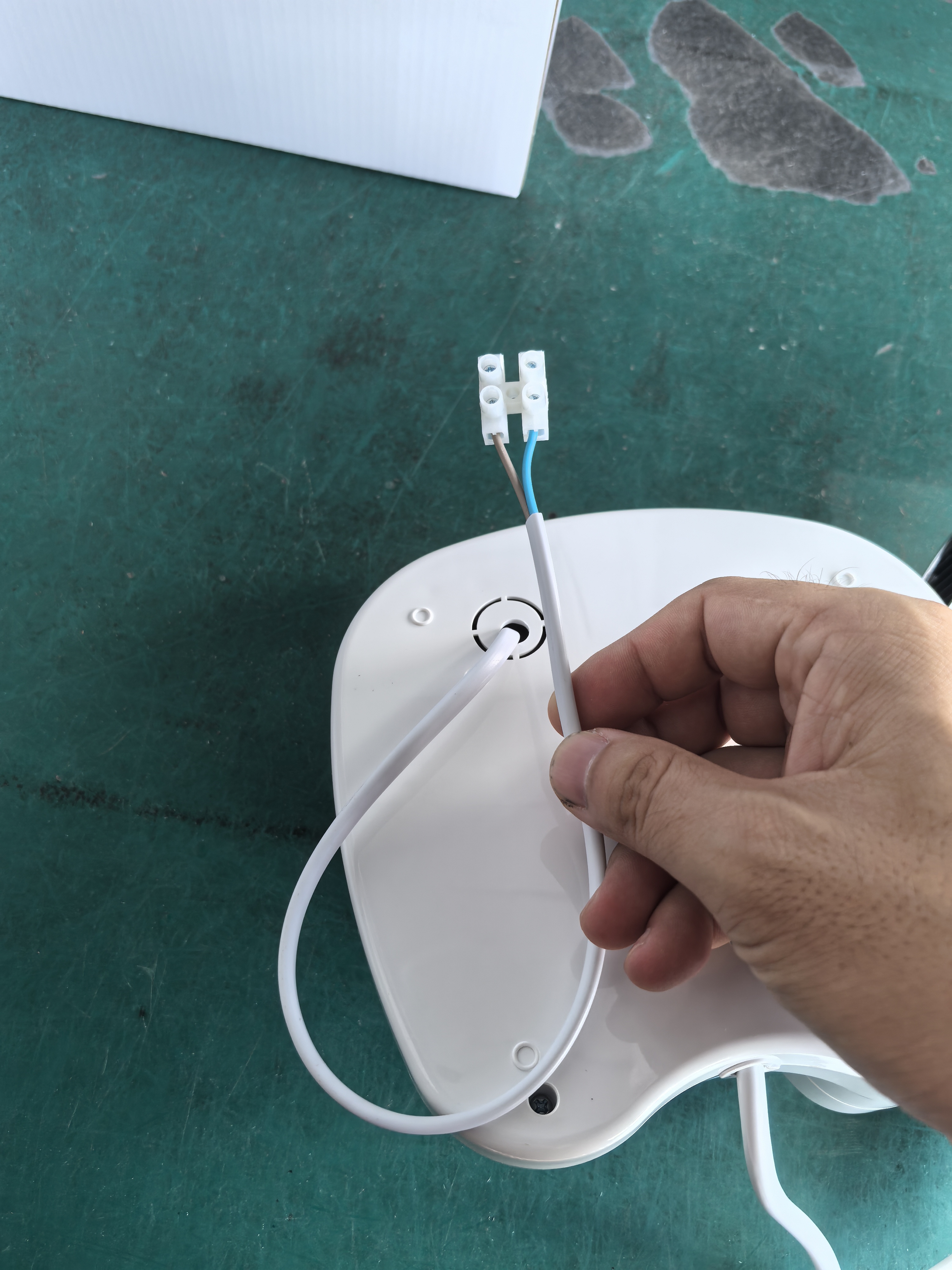
Record the wall outlet position and the distance from the outlet to the base.
HUIPU plug-in configurations normally route the power lead from the lower part of the wall base. The coiled mains lead is generally about 2 to 2.5 metres when extended.
The plug can be configured for European, Middle Eastern, and other destination markets according to project requirements.
Confirm whether the current outlet can remain in place, whether the lead can reach it cleanly, and whether the plug standard matches the market. If not, the project may need adaptation.
For a hardwired replacement, the position of the building-side cable matters.
HUIPU can support two common cable-entry arrangements.
With rear cable entry, the building cable enters from behind the wall base and can remain concealed after installation.
With side cable entry, the cable enters through an opening around the side of the base. This can help when the existing cable cannot enter from behind, although part of the cable may remain visible.
HUIPU can also configure a terminal block inside the base so the installer can connect the existing building-side cable directly.
Record where the current cable exits the wall and compare that position with the proposed base. If the cable route must move, the job is no longer a simple direct replacement.
A replacement can fit the wall and still be inconvenient in daily use.
Check the distance from the wall base to the normal drying position in front of the mirror.
The dryer should be easy to remove from the holder. The coiled cord should provide enough working range without forcing the guest to pull against the base.
This matters if the new unit is slightly higher, lower, or farther from the mirror than the old one. A real-room sample test gives a clearer answer than product dimensions alone.
After recording the wall and electrical conditions, classify the project before placing a bulk order.
The new model fits the available wall area and can use the existing electrical arrangement with little or no extra work.
The dryer is suitable, but the room needs small changes such as new fixing holes, a different cable route, or local adjustment around the base.
The standard product does not fully match the old installation, but the project quantity may justify a mounting-hole or wall-base adjustment.
HUIPU can evaluate this case by case. Technical feasibility and MOQ must be confirmed before production.
A retrofit is needed when the old and new systems differ significantly in mounting position, wall-base structure, cable route, or electrical connection.
If the installation position or wiring needs to change, follow the wall-mounted hair dryer installation guide before approving the final setup.
If a standard base does not match the existing installation, HUIPU can review whether the mounting holes or wall-base structure can be adjusted.
The review starts with photos, dimensions, fixing method, and electrical arrangement.
Not every project can support this change. The solution depends on the selected model, the required adjustment, order quantity, and project-specific MOQ.
If structural changes are required, review custom wall-base and mounting options for hotel projects.

HUIPU can provide 1–2 units for on-site compatibility testing before the full order is confirmed.
The sample test should focus on replacement fit. Check whether:
the new base fits the existing wall area
old holes or marks remain exposed
the current outlet or building cable can be used
the cable-entry position works
the cord reaches the normal guest-use area
the unit conflicts with the mirror or vanity
the fixing method works on the actual wall
A sample installation can prevent the same compatibility problem from being repeated across many rooms.
A recent inquiry from Argentina shows why existing-condition checks matter.
The buyer already had wall-mounted hair dryers installed and wanted to replace part of the existing stock. The initial quantity was around 20 units, with the possibility of larger quantities later.
After the customer shared photos, the key question became the power connection. The existing dryers were connected directly into the wall, so a suitable replacement had to be checked against that hardwired arrangement.
A visually similar product was not enough. The old installation had to be reviewed first.
Before approving a replacement model, confirm:
Area | What to Check |
|---|---|
Existing dryer | Photos, dimensions, power, voltage |
Wall base | Base size and available wall area |
Fixing | Existing holes and fixing method |
Room layout | Mirror, vanity, nearby fixtures |
Electrical type | Plug-in or hardwired |
Cable route | Rear entry, side entry, or outlet position |
Plug | Destination-market plug standard if needed |
Cord reach | Distance from base to normal use position |
Custom work | Whether base or mounting adjustment is needed |
Sample | Whether 1–2 units will be tested first |
Final result | Direct replacement, minor adaptation, custom solution, or retrofit |
Once the existing installation is documented, compare those requirements with available wall-mounted hair dryers for hotel renovation projects.
If the installation is compatible but you still need to decide which configuration fits the property, see how to choose a wall-mounted hair dryer for hotels.
HUIPU can evaluate models such as RCY-67220, SG-01C, RCY-67490, and the 1600W high-power wall-mounted model for renovation projects. These platforms can be produced in plug-in or hardwired configurations according to project requirements.
For larger orders, HUIPU can also provide about 1–2% additional complete units as backup or replacement stock, depending on the order arrangement.
A hotel wall-mounted hair dryer replacement should start with the existing room, not with a new product catalogue.
Record the old wall base, fixing method, electrical connection, cable route, voltage, and guest-use position first.
Then decide whether the project is a direct replacement, a minor adaptation, a custom compatibility project, or a retrofit.
For multi-room projects, test 1–2 samples in an actual guest room before confirming the full replacement order.
Once the compatibility conditions are clear, you can compare HUIPU wall-mounted hair dryer models and send the existing installation photos and project details for a compatibility review.
Yes, but the new model should be checked against the existing wall base, fixing points, electrical connection, cable-entry position, and guest-use space. Similar appearance alone does not confirm compatibility.
Not always. New holes may be possible. For suitable projects, HUIPU can also evaluate mounting-hole or wall-base adjustments. The solution depends on the wall condition, model structure, order quantity, and project-specific MOQ.
Yes, if the new unit can work with the existing building-side cable and cable-entry position. The connection method should be confirmed before ordering.
Send clear photos of the existing dryer and wall base, product dimensions if available, power, voltage, installation method, installation position, fixing method, and details of the current electrical connection.


