
Language
Views: 0 Author: Site Editor Publish Time: 2026-01-19 Origin: Site


Most hair dryers blow air at about 90°F to 160°F (32°C to 71°C), depending on the heat setting, airflow strength, and how close the dryer is to the hair. Low heat is usually around 90°F to 110°F, while high heat often reaches 140°F to 160°F
For most people, medium heat with strong airflow is the safest choice for everyday drying. A 2011 study published in Annals of Dermatology found that repeated blow-drying at higher temperatures caused greater cuticle damage over time, with the most severe surface damage observed under the hottest test condition. The same study also noted that using a hair dryer at a distance of about 15 cm with continuous motion caused less damage than natural drying.
So a hair dryer can damage hair over time, but the bigger risk usually comes from holding hot air too close to one area for too long, especially when the hair is nearly dry.
In other words, temperature matters, but it is not the only thing that matters. Airflow, distance, drying time, and hair type all affect how hot a dryer feels and how much stress it puts on the hair.
Yes, blow drying can damage hair — but not simply because of how hot a hair dryer gets. In most cases, the risk comes from how heat is applied rather than the temperature itself.
Unlike flat irons or curling tools that use direct high heat, a hair dryer uses moving air. This makes it generally safer, but damage can still occur when heat is concentrated on one area for too long, held too close, or used on nearly dry hair. In these situations, the outer cuticle layer can become stressed, leading to dryness, rough texture, and frizz over time.
In practice, heat damage from blow drying is usually caused by localized heat buildup and repeated exposure. This is why airflow strength, drying distance, and continuous movement are just as important as heat settings.
From a hair science perspective, severe keratin damage occurs at temperatures higher than typical hair dryer output. However, visible damage often begins earlier at the cuticle level when moderate heat is applied inefficiently. Over time, this can affect moisture balance, smoothness, and overall hair condition.
For this reason, a well-designed hair dryer should not rely on heat alone but deliver balanced airflow, stable temperature, and proper heat protection to reduce unnecessary damage while drying efficiently.
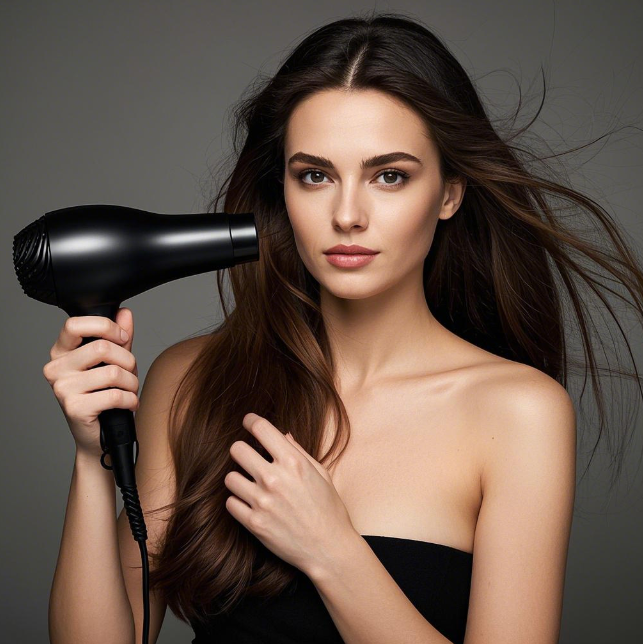
When people search for hair dryer heat, they often assume it refers to a single temperature value. In reality, there are three different heat concepts involved, and confusing them leads to misunderstanding.
| Heat Concept | What It Refers To | Why It Matters |
| Heating element temperature | Temperature of the internal heating wire | Not directly relevant to users |
| Air outlet temperature | Temperature of air leaving the nozzle | What users actually experience |
| Heat exposure on hair | Heat absorbed by the hair shaft | Determines damage risk |
When people ask how hot a hair dryer gets, the most useful number is the air outlet temperature, not the internal heat of the device.
The air outlet temperature is measured at the nozzle, but the heat your hair feels depends on:
Distance between dryer and hair
Airflow speed
Moisture level in the hair
This explains why two dryers with similar temperatures can feel very different in real use.
Drying hair is not about “burning water away.” Heat works by making water molecules move more easily, allowing moisture to evaporate faster.
As long as hair is wet, a significant portion of heat energy is consumed by evaporation instead of overheating the hair fiber.
Problems arise when:
Hair becomes nearly dry
High heat settings are still used
Airflow is weak, and heat accumulates
Different heat settings are designed for different drying needs, not different levels of safety by default.
| Heat Setting | Typical Temperature Range | Best Use |
| Low heat | 90–110°F (32–43°C) | Fine hair, damaged hair, finishing |
| Medium heat | 110–140°F (43–60°C) | Daily drying for most hair types |
| High heat | 140–160°F (60–71°C) | Long and thick hair, faster drying |
Professional and salon-type quality hair dryers rarely exceed these ranges at the air outlet because controlled heat is more effective and safer than extreme heat.
The actual warmth you feel from a blow dryer is influenced by several technical factors, not just temperature settings.
The heating element converts electricity into heat, but its design determines:
How evenly is the heat distributed
How quickly temperature stabilize
Whether hot spots occur
Poor heating element design often causes uneven heat, which users experience as uncomfortable or overly hot air.
A common misconception is that higher wattage means a hotter dryer. In reality, wattage mostly affects airflow and drying time, not maximum temperature.
| Factor | High-Wattage Dryer | Low-Wattage Dryer |
| Heat output | Controlled | Can feel uneven |
| Airflow | Stronger | Weaker |
| Drying time | Shorter | Longer |
| Hair damage risk | Often lower | Often higher |
Long exposure to heat causes more damage than brief exposure, which is why strong airflow is so important.
For long, thick hair, airflow often matters more than extreme heat. Strong airflow removes moisture faster, reducing the total drying time and limiting heat exposure.
Understanding safe hair dryer heat requires knowing how hair responds to temperature.
Hair is composed mainly of keratin protein. Laboratory studies show that protein breakdown begins at temperatures above 300°F (150°C), which is much higher than normal hair dryer air outlet temperatures.
However, localized overheating can still damage hair if:
Heat is concentrated in one spot
Hair is already dry
The dryer is held too close
Safe Hair Dryer Heat vs Risky Use
Usage Condition | Risk Level | Explanation |
| Medium heat + strong airflow | Low | Efficient drying |
| High heat on wet hair | Moderate | Short exposure |
| High heat on nearly dry hair | High | Protein stress |
| Dryer too close to scalp | High | Local overheating |
Different hair types respond differently to heat, which is why temperature control matters.
Fine hair dries quickly and requires:
Low to medium heat
Higher airflow
This prevents overdrying and reduces the risk of breakage.
Thicker hair benefits from:
Medium heat
Strong airflow
Extreme temperatures are unnecessary and often counterproductive. From a manufacturing perspective, hair dryer performance is not defined by peak heat alone. It depends on how the heating system, airflow structure, temperature control, and safety protection work together in actual use.
Modern hair dryers rely heavily on technology to manage heat safely.
High-quality hair dryers use thermostats to prevent overheating by monitoring temperature in real time. Intelligent control systems adjust heat output continuously to maintain stability instead of allowing sudden spikes.
Auto shut-off systems stop the dryer when:
Airflow is blocked
The temperature rises too quickly
These features protect both the user and the device, and they are strong indicators of product reliability.
Ionic technology is often misunderstood in relation to heat.
Negative ion technology does not reduce air temperature directly. Instead, it reduces cuticle swelling, helping moisture evaporate more efficiently. This shortens drying time and lowers overall heat exposure.
By keeping the cuticle smoother, ionic hair dryers help hair dry faster, feel softer, and experience less static—even at normal drying temperatures.
Users often complain that a dryer “refused to dry my hair and just blew crispy, burning air.” This sensation usually comes from poor airflow design rather than excessive temperature.
When airflow is weak, heat builds up at the nozzle, making the dryer feel hotter without improving drying efficiency.
Salon-type quality hair dryers focus on:
Heat stability
Balanced airflow
Comfort during extended use
They are designed to dry hair efficiently without relying on extreme heat.
Even a well-designed dryer requires proper use.
Keep the dryer 6–8 inches from your hair
Use high heat only while the hair is still wet
Constant movement prevents localized overheating and reduces damage risk.
A hair dryer does not need to be extremely hot to work effectively. In most cases, safe and efficient drying depends on the right balance of airflow, temperature control, and product design.
Most reliable hair dryers operate within a practical range of about 90°F to 160°F, where heat is managed to remove moisture efficiently while helping reduce unnecessary stress on the hair. For professional and commercial use, stable airflow, consistent heat output, and built-in safety features are essential for both performance and reliability.
Understanding how hot a hair dryer gets helps buyers evaluate not only drying performance, but also safety and long-term product quality. As a professional hair dryer manufacturer, Huipu provides hair dryer solutions designed for controlled heat, efficient airflow, and dependable daily use. For more information about our products, specifications, or customization options, please contact us.

